
Flux AI vs. MidJourney: A New Era of Generative Art as Flux AI Enters the Scene

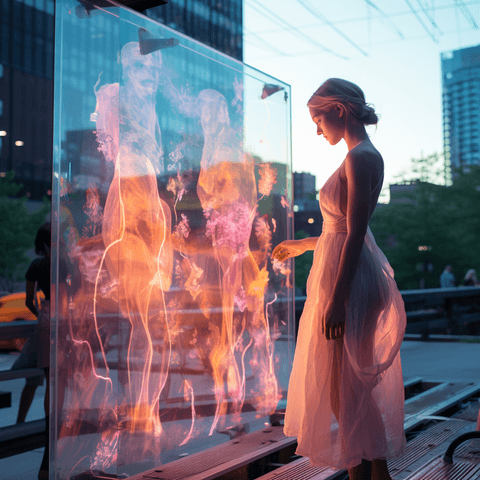
Generative AI art has become a transformative force in creative industries, with platforms like MidJourney leading the way for over two years. However, a new competitor has emerged: Flux AI, a fresh player that promises to disrupt the generative art space with its advanced capabilities and flexible design options. While MidJourney is celebrated for its distinctive artistic style and rich community-driven features, Flux AI brings a novel approach, offering greater control and diversity in output. In this post, we’ll explore the key differences between these two platforms, comparing their functionalities, customization options, and target use cases to help you understand which tool is best suited for your creative needs.
What is Flux AI?
Flux AI is a cutting-edge generative AI platform that focuses on creating visually stunning, high-quality images from natural language descriptions. Like other image-generation models, Flux AI uses deep learning algorithms to translate textual input into complex visual compositions. Its strength lies in its ability to produce highly detailed, stylized images across a wide range of artistic genres.
What sets Flux AI apart is its advanced neural architecture that emphasizes dynamic adaptability. This means that Flux AI doesn’t just rely on a fixed set of trained styles; it can intelligently interpret and apply styles based on user input in real-time, adapting to more specific artistic directions. This gives users more control over the creative process, allowing for more nuanced results that closely match the vision described in the prompt.
Flux AI has also been designed to integrate seamlessly with creative workflows, offering users a user-friendly interface, real-time rendering, and a rich set of customization options. The platform can be used by artists, designers, marketers, and anyone who requires high-quality visual content on-demand.

MidJourney: The Power of Artistic Styles
MidJourney is another popular AI tool known for its exceptional ability to produce highly stylized images, often with a dreamlike or otherworldly aesthetic. Unlike traditional generative models that focus on realism, MidJourney tends to prioritize art direction, offering outputs that resemble hand-painted artwork, digital illustrations, or surreal photorealism.
One of MidJourney’s key features is its distinctive style-driven generation. By using specific "style prompts" (e.g., "cyberpunk," "Renaissance painting," or "futuristic"), users can push the AI to produce highly thematic and specific images that lean into particular visual aesthetics. The tool also allows for iterative refinement, where users can tweak the image in response to feedback or adjust details like lighting, perspective, or texture.
MidJourney also offers community-driven features, including prompt sharing and a collaborative environment for exploring new creative possibilities. Its strength lies in its focus on delivering visual art that resonates emotionally, often leading to images that feel expressive and imaginative.
Key Differences: Flux AI vs. MidJourney
While both platforms share a common goal of generating high-quality images from text, they cater to slightly different user needs and offer distinct features.
1 - Artistic Style vs. Flexibility
MidJourney: MidJourney thrives on producing stylized art. If you're after an image with a specific artistic flair or an imaginative, often surreal style, MidJourney excels at this. It’s a great choice for projects that require bold, emotional, or avant-garde aesthetics.
Flux AI: Flux AI leans toward offering more flexibility in how it handles prompts. While it certainly supports artistic styles, it’s better suited for users who need a broader range of outputs, from realistic to abstract, without being locked into one specific artistic direction.
2 - Customization and Control
MidJourney: MidJourney is known for its style-based commands and the ability to iterate on designs. However, it is more constrained when it comes to fine-tuning specific visual elements beyond style. It’s ideal if you're comfortable with a certain aesthetic but want to explore different variations of it.
Flux AI: Flux AI gives users more control over the finer details of image creation, allowing you to specify aspects like mood, texture, lighting, and composition with greater precision. This makes it particularly appealing for professional designers or artists who need highly customizable visuals.
3 - Output Diversity
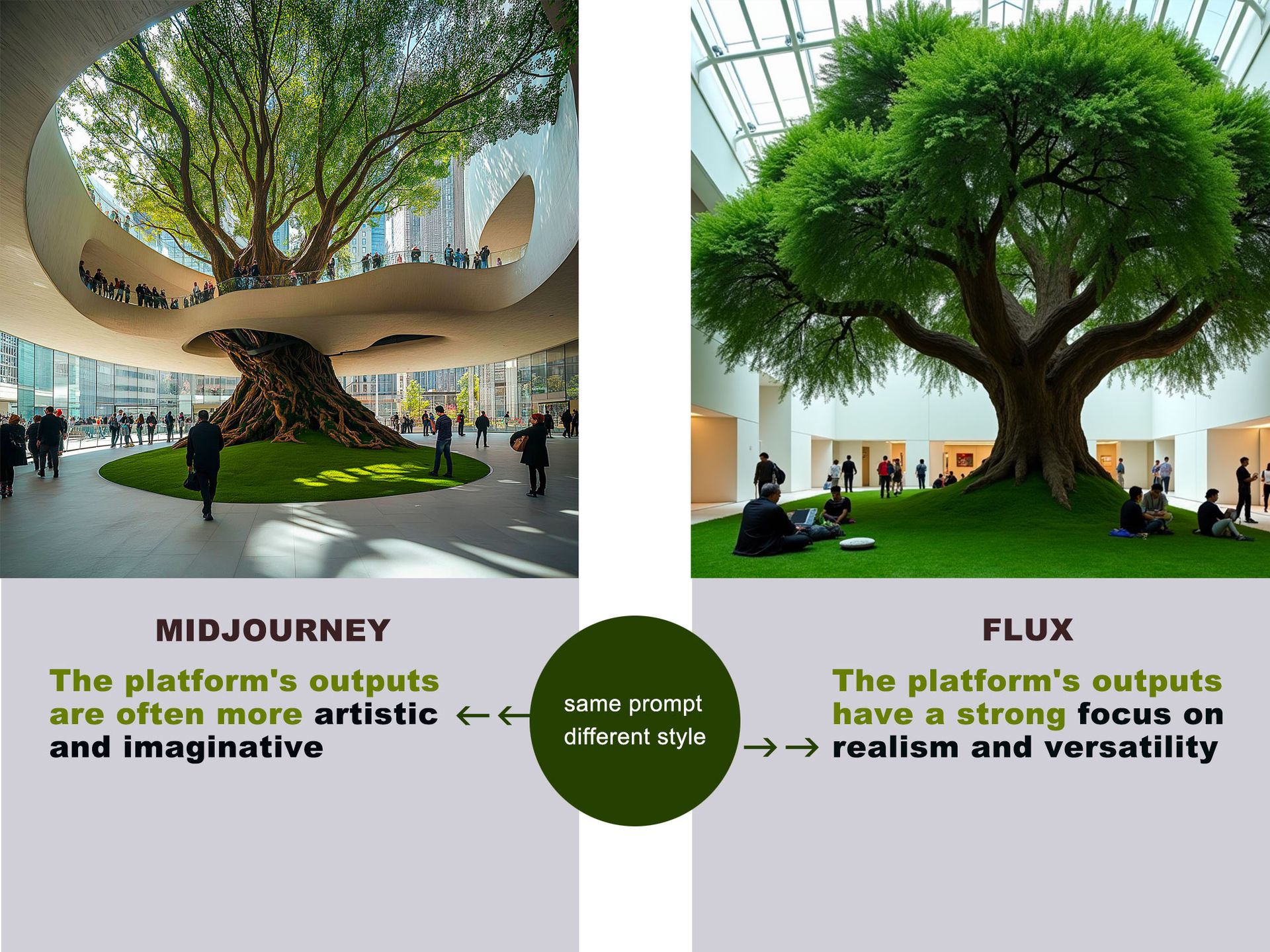
MidJourney: The platform's outputs are often more artistic and imaginative rather than realistic, leaning heavily on mood and creative interpretation.
Flux AI: While Flux AI can create artistic outputs, it also has a strong focus on realism and versatility, making it useful for a wider variety of applications, including commercial and editorial use.
4- Use Cases
MidJourney: Ideal for users in the art, design, and entertainment industries who are looking to create unique, visually arresting images with a specific style. It's particularly popular among graphic designers, illustrators, and digital artists who enjoy the creative freedom of exploring artistic directions.
Flux AI: Better suited for multi-disciplinary professionals who require high-quality imagery across different visual styles. It’s used in industries ranging from marketing to product design, where flexibility and accuracy in the final output are key.
5 - Community and Collaboration
MidJourney: MidJourney has a strong online community with active users who share prompts and collaborate on creating art. It’s not just about creating images; it’s about sharing creative processes and learning from one another.
Flux AI: While Flux AI also provides a collaborative environment, its focus is more on enabling individual creativity and precision. It’s more business-oriented but can still be used in collaborative creative contexts.
- Which Should You Choose?
The choice between Flux AI and MidJourney largely depends on your needs:
Choose Flux AI if you require a high degree of control and the ability to create a wide range of image styles. It's ideal for professionals working on specific visual projects that demand a tailored approach, such as marketing campaigns, product visuals, or editorial content.
Choose MidJourney if you're looking for artistic inspiration and enjoy experimenting with more abstract or stylized outputs. It’s perfect for creative individuals who want to produce unique, eye-catching visuals that evoke strong emotions.
Conclusion
Both Flux AI and MidJourney are powerful tools in the world of generative image technology. While they share similarities in their use of AI to turn text into images, they each have their unique strengths. Flux AI offers greater control and versatility, making it ideal for professional and commercial projects. MidJourney, on the other hand, shines in its ability to produce stunning, artistic outputs with a distinctive flair.
Ultimately, the best choice depends on your specific needs: whether you're seeking highly stylized art or flexible, customizable imagery. Either way, both platforms represent the cutting edge of generative AI and are opening up new frontiers for creative expression.
Try them and decide