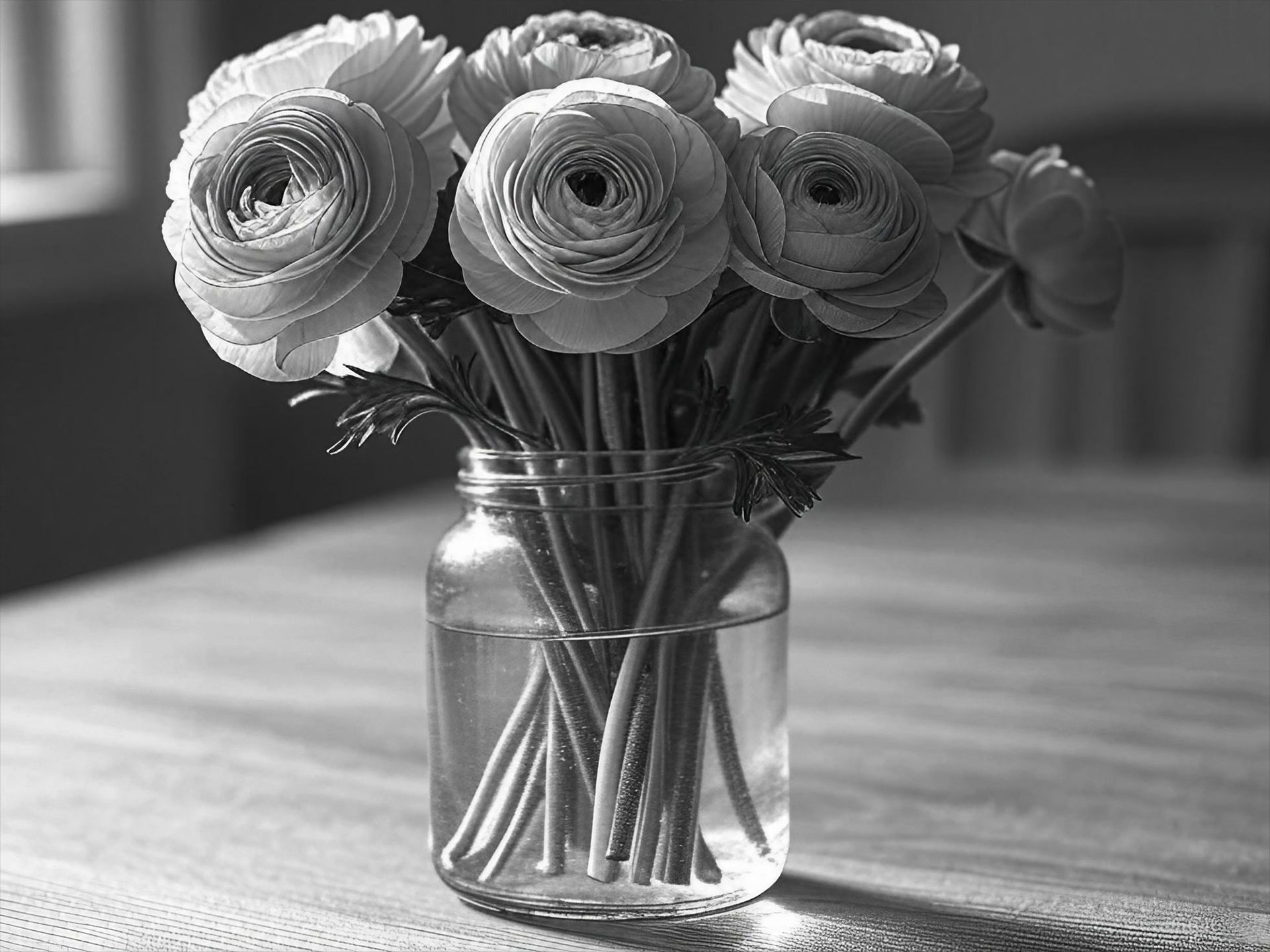
To Create Stunning Prompts and ImagMastering AI tools for creating stunning images—like MidJourney—requires more than just imagination.

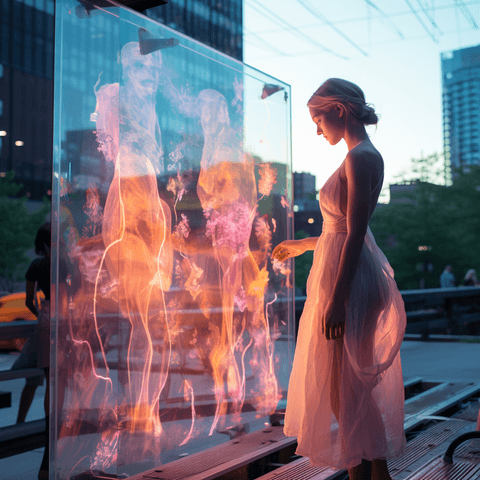
Photography Basics
1. Fundamental Concepts of Photography
1.1 Composition
Rule of Thirds: Divide the image into an imaginary 3x3 grid. Position key subjects along the lines or at the intersections for a balanced effect.
Symmetry and Balance: Use symmetry or balance between elements to create pleasing images.
Leading Lines: Lines (roads, rivers, etc.) that guide the viewer's eye to the subject.
Perspective and Depth: Elements like background blur (bokeh) or arrangement of objects in the foreground/background create a sense of depth.
1.2 Lighting
Natural Light: Use the "golden hour" (an hour after sunrise or before sunset) for warm, soft light.
Hard vs Soft Light: Hard light creates sharp shadows; soft light creates gradual transitions.
Backlighting: Light from behind the subject creates silhouettes or dramatic effects.
Light Colors: Use colored lights (neon, tungsten, etc.) to set a mood.
1.3 Framing
Wide-Angle: Great for landscapes or broad scenes.
Telephoto: For distant subjects or portraits with blurred backgrounds.
Macro: For close-up details.
Angles: Experiment with high angles (bird’s eye view) or low angles (worm’s eye view).
1.4 Color
Color Palette: Choose harmonious combinations (complementary, analogous).
Saturation: Play with intense or subtle colors.
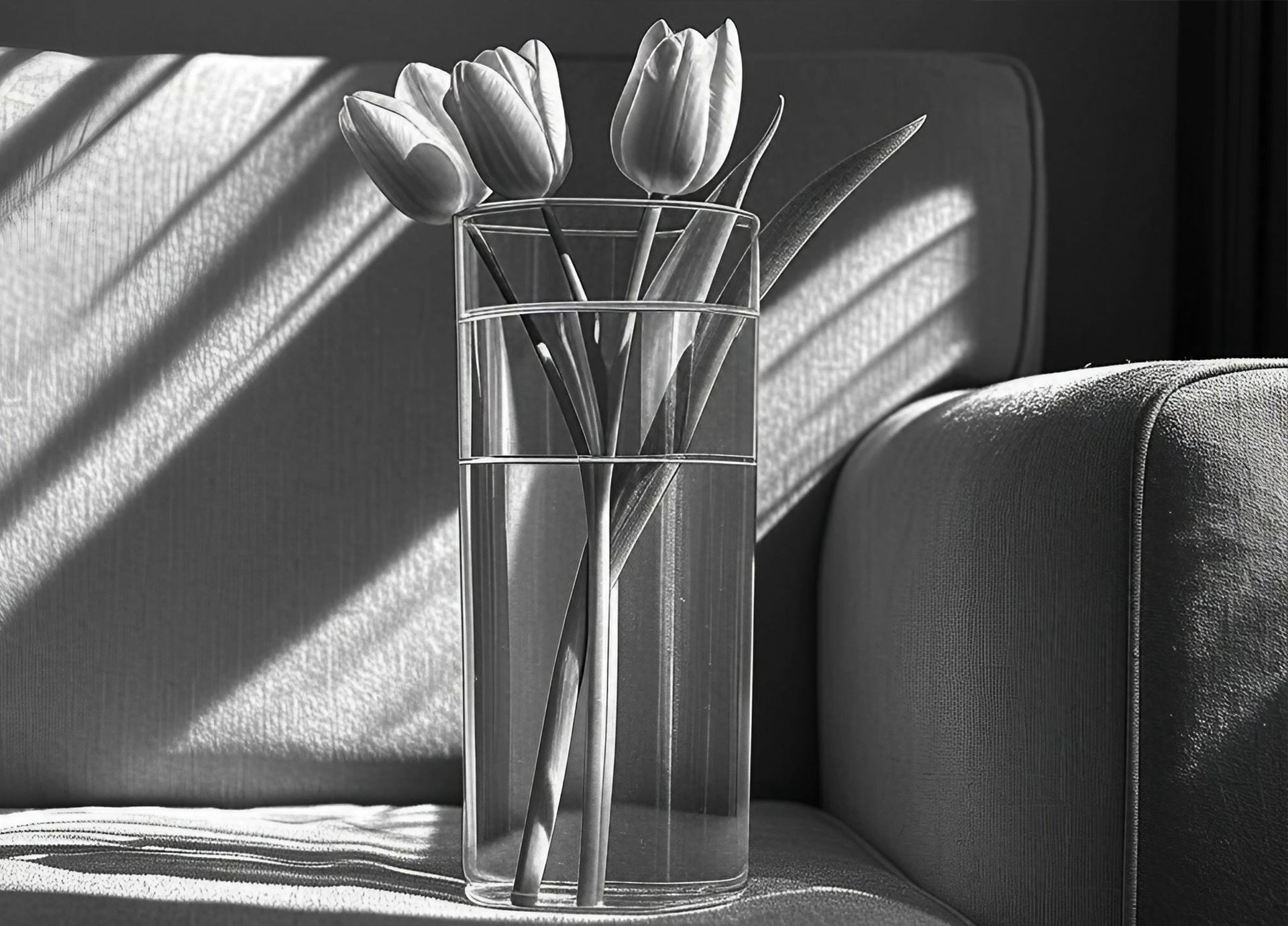
Monochrome: Use a limited color range for minimalist effects.
2. Visual Language for Prompts
2.1 Environment Description
Be specific about details like season, time of day, weather, and type of location (snowy mountains, neon-lit city streets, tropical beaches).
Add sensory details, such as:
“A forest at sunset, with beams of light filtering through the leaves.”
“A futuristic city at night, neon lights reflecting on wet pavement.”
2.2 Photographic Style
Specify the visual style:
Cinematic (high contrast, intense atmospheres).
Minimalist (few elements).
Street Photography (spontaneous moments, urban scenes).
Vintage (aged effects, desaturated colors).
2.3 Focus on Emotion
Use terms that describe the emotional tone:
“A serene and contemplative scene.”
“A dynamic and energetic image.”
2.4 Technical Details
Specify lens type or setting:
“Shot with a wide-angle lens, deep depth of field.”
“Portrait with a blurred background (bokeh effect).”
3. Types of Framing
3.1 Long Shot (Wide Shot)
Description: Captures a wide scene, with the subject often small in comparison to the surroundings.
Uses:
Establishing spatial context.
Highlighting landscapes or environments.
Conveying solitude or vastness.
Example: A person walking in a mountainous valley.
3.2 Full Shot
Description: The subject is fully visible from head to toe, occupying a significant part of the frame.
Uses:
Showcasing the subject’s relation to the environment, with emphasis on the figure.
Example: A dancer on stage, with the theater in the background.
3.3 Medium Long Shot (American Shot)
Description: Cuts the subject at mid-thigh.
Uses:
Common in Western cinema to show gestures and actions.
Centers the subject while retaining some context.
Example: A cowboy ready to draw his gun in a desert landscape.
3.4 Medium Shot
Description: Shows the subject from the waist up.
Uses:
Highlights facial expressions and hand movements.
Ideal for dialogues or intimate scenes.
Example: An artist painting a canvas, focused and intense.
3.5 Close-Up
Description: Frames the face or a specific detail of the subject.
Uses:
Emphasizes strong emotions.
Draws attention to significant details.
Example: Tears streaming down a person’s face.
3.6 Extreme Close-Up
Description: Focuses on a very small detail, such as an eye, hand, or object.
Uses:
Dramatizes or highlights a key element.
Example: A drop of blood on a blade.
3.7 Detail Shot
Description: A close-up of a specific detail, often used for textures or objects.
Uses:
Creates intimacy or draws attention to something important.
Example: The texture of velvet fabric.
4. Angles
4.1 Front Angle
Description: The camera is positioned directly in front of the subject, at eye level.
Uses:
Conveys neutrality and immediacy.
Example: A traditional portrait.
4.2 High Angle
Description: The subject is shot from above.
Uses:
Makes the subject appear small or vulnerable.
Offers a dominating perspective.
Example: A child seen from above.
4.3 Low Angle
Description: The subject is shot from below.
Uses:
Makes the subject look powerful or imposing.
Example: A skyscraper shot from street level.
4.4 Bird’s Eye View
Description: The image is captured perpendicularly from above, like a bird’s view.
Uses:
Creates an abstract or geometric effect.
Highlights symmetry or chaos.
Example: A crowded square seen from a drone.
4.5 Worm’s Eye View
Description: The image is captured from below, looking upward, like a worm’s perspective.
Uses:
Emphasizes monumentality.
Example: Tall trees viewed from the ground.
4.6 Dutch Angle
Description: The frame is tilted, creating a diagonal effect.
Uses:
Conveys tension, instability, or dynamism.
Example: An action scene in a thriller film.

5. Perspective
5.1. Central Perspective
Description: Lines converge toward a central point.
Uses:
Create a symmetrical and orderly effect.
· Example: A hallway viewed from the center.
5.2. Side Perspective
Description: The subject is positioned to the side of the camera.
Uses:
Show movement or direction.
Example: A person walking along a wall.
5.3. Layered Perspective
Description: The image consists of multiple levels (foreground, midground, background).
Uses:
Add depth and visual richness.
Example: A mountain, a lake, and trees in one photo.
5.3. Layered Perspective
Description: The image consists of multiple levels (foreground, midground, background).
Uses:
Add depth and visual richness.
Example: A mountain, a lake, and trees in one photo
6. Using Shots in Prompts
When creating a prompt for tools like MidJourney, describe the shot and angle precisely. Examples:
Front Angle with Close-Up:
"Close-up of an elderly man’s wrinkled face, natural light, front-facing, with deep emotional expression."
Bird’s Eye View with Long Shot:
"Bird’s eye view of a bustling market in Marrakech, vibrant colors, shadows cast by the stalls."
Low Angle with Wide-Angle Lens:
"Low-angle shot of towering skyscrapers against a cloudy sky, captured with a wide-angle lens."
Photography Lenses: A Comprehensive Guide
Photography lenses (or optics) are essential tools in photography as they determine how an image is captured, influencing perspective, focus, and the field of view. Understanding the different types of lenses will help you describe the visual characteristics of images in detail for your prompts.
1. Types of Lenses
Lenses are primarily distinguished by their focal length, measured in millimeters (mm). Here are the main types:
1.1. Wide-Angle Lens
Focal Length: 10-35mm.
Field of View: Wide; captures large scenes, ideal for landscapes and architecture.
Characteristics:Exaggerates perspective (close objects appear larger, distant ones smaller).
May introduce edge distortion.
Examples:"Landscape photography with dramatic mountains and wide horizons."
"Cityscape with tall buildings and expansive streets."
1.2. Standard Lens
Focal Length: 35-70mm (50mm is the most common).
Field of View: Similar to human vision.
Characteristics: Natural and balanced perspective.
Versatile; suitable for portraits, street photography, and everyday shots.
Examples:"A candid street photo of a musician playing on the sidewalk, natural perspective."
1.3. Telephoto Lens
Focal Length: 70mm and beyond (up to 600mm or more).
Field of View: Narrow; captures distant subjects with close-up detail.
Characteristics: Compresses perspective (objects appear closer together).
Ideal for portraits with blurred backgrounds (bokeh) or wildlife photography.
Examples:"Close-up of a lion in the savanna, taken with a telephoto lens, shallow depth of field."
"Portrait with creamy bokeh background, telephoto lens."
1.4. Macro Lens
Focal Length: 35-200mm, with very close focusing capabilities.
Field of View: Extremely narrow, for capturing fine details.
Characteristics:Perfect for close-ups of small subjects like insects, plants, or intricate details.
Reveals textures and details invisible to the naked eye.
Examples:"Detailed macro shot of a honeybee collecting pollen on a flower."
1.5. Fish-Eye Lens
Focal Length: 8-15mm.
Field of View: Extremely wide (up to 180°), with strong distortion.
Characteristics:Creates curved, bubble-like images.
Used for artistic effects, extreme sports, or creative panoramic views.
Examples:"A fisheye view of a skateboarder in mid-air, dramatic distortion."
1.6. Zoom Lens
Focal Length: Variable (e.g., 18-55mm, 70-200mm).
Field of View: Versatile; covers multiple focal lengths in one lens.
Characteristics:Ideal for flexibility in situations where lens changes aren’t possible.
Less bright than prime lenses but more practical.
Examples:"Photograph of a football game, taken with a 70-200mm zoom lens, capturing action and close-ups."
1.7. Prime Lens
Focal Length: Fixed, e.g., 35mm, 50mm, 85mm.
Field of View: Depends on the focal length.
Characteristics:Generally brighter and sharper than zoom lenses.
Encourages the photographer to move to find the perfect frame.
Examples:"Portrait of a woman taken with an 85mm prime lens, sharp focus on her eyes."
Shutter Speed: A Key Element of Photography
Shutter speed is one of the core elements of exposure in photography, alongside aperture and ISO. It controls how long the camera's sensor is exposed to light, directly affecting the brightness of an image and the way motion is captured.
1. What Is Shutter Speed?
Shutter speed refers to the duration the camera’s shutter remains open to let light hit the sensor.
Measured in Seconds: Often expressed as fractions (e.g., 1/250, 1/60) or full seconds for long exposures (e.g., 1", 5").
Range: Can vary from extremely fast (e.g., 1/8000s) to very slow (e.g., 30s or more).
2. Effects of Shutter Speed
2.1. Motion Blur
Slow Shutter Speeds: (e.g., 1/2s, 1s) Capture motion as a blur.Use for: Waterfalls (smooth, silky effect).
Light trails from moving vehicles at night.
Examples:“A 5-second exposure of a waterfall for a dreamy, flowing effect.”
2.2. Freezing Motion
Fast Shutter Speeds: (e.g., 1/500s, 1/2000s) Freeze action sharply.Use for:Sports photography.
Wildlife or fast-moving subjects.
Examples:“A 1/1000s shot of a bird in flight with clear wing details.”
3. Shutter Speed and Exposure
Fast Speeds: Reduce light, requiring a wider aperture or higher ISO for proper exposure.
Slow Speeds: Allow more light, ideal for low-light conditions but risk motion blur without stabilization.
4. Practical Tips for Using Shutter Speed
4.1. Tripods for Stability
Essential for slow shutter speeds to avoid camera shake.
4.2. Shutter Speed Rules of Thumb
Handheld Shooting: Use a speed at least as fast as the reciprocal of the focal length (e.g., for a 50mm lens, use 1/50s or faster).
Creative Choices: Experiment with slower speeds for artistic effects.
4.3. Combining with Other Settings
Balance shutter speed with aperture and ISO to achieve the desired look and proper exposure.
5. Common Applications
Landscape: Long exposures (e.g., 5-10s) for serene scenes.
Sports: Fast speeds (e.g., 1/1000s or faster) to freeze athletes in action.
Night Photography: Long exposures for light trails or star trails.
Shutter speed is a powerful tool that shapes the mood and storytelling of an image, offering creative control over motion and light. Whether you're freezing a bird mid-flight or capturing the serene flow of a river, mastering shutter speed is essential for impactful photography.
Take a look at:
PROFESSIONAL PHOTOGRAPHY PROMPT GENERATOR